Your Phone Knows You're Lonely and It's Absolutely Using That Against You
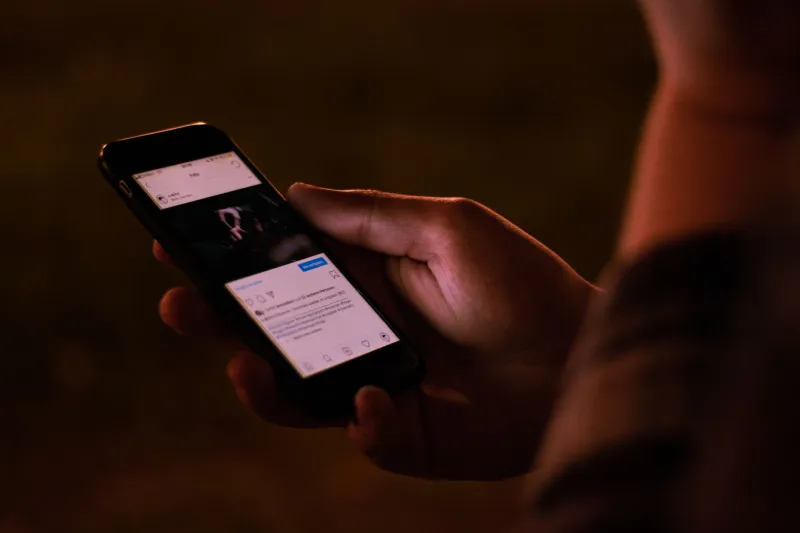
Let's set the scene. It's 11:47 PM on a Tuesday. You're lying in bed, you've already brushed your teeth, you told yourself you were going to sleep early — and then, somehow, your thumb finds Instagram. Within sixty seconds, you've seen your ex's new haircut, a couple announcing a pregnancy, and a reel of someone your age owning a boat. Congratulations. You are now fully, catastrophically awake.
Here's the thing nobody wants to say out loud: that wasn't an accident.
The apps aren't just passively sitting there waiting for you to show up. They are actively engineering the conditions that make you show back up, stay longer, and feel just bad enough about yourself to keep scrolling in search of a hit of something better. Loneliness isn't a side effect of social media. It's a revenue strategy.
The Mood They're Selling You (Without Your Permission)
Back in 2014, Facebook ran a now-infamous internal experiment where they manipulated the emotional content of roughly 700,000 users' News Feeds — showing some people more negative posts, others more positive — to see if emotions were contagious online. Spoiler: they are. The study was published, the backlash was enormous, and Facebook apologized in the most corporate way imaginable.
But here's what got buried in the noise: the experiment worked. Beautifully, in fact. Emotional contagion through a feed is real, measurable, and — if you're a platform trying to maximize time-on-app — incredibly useful.
Fast forward to now, and we've got a mountain of leaked internal research from multiple platforms suggesting that the emotional manipulation didn't stop. It got more sophisticated. A 2021 Wall Street Journal investigation revealed that Facebook's own researchers found Instagram made body image issues worse for one in three teenage girls. The internal slide deck essentially said: we know this is happening and we're not sure what to do about it. The app launched anyway. The features stayed.
That's not a bug report. That's a business decision.
The Ex-Post Timing Is Not a Coincidence
Ever notice how your most emotionally charged moments seem to coincide with the most emotionally charged content? You're having a rough week and suddenly your feed is wall-to-wall engagement announcements and vacation photos. You just got dumped and your ex's new situationship appears in your Explore page like clockwork.
Algorithms track behavioral signals obsessively — when you pause, when you screenshot, when you rewatch, when you zoom in on something you probably shouldn't be zooming in on. They know that emotionally activated users engage more. Anger, jealousy, longing, FOMO — all of these states produce clicks, comments, shares, and most importantly, more time on the app.
There's a term researchers use: "variable reward scheduling." It's the same psychological mechanism behind slot machines. You don't know when the good post is coming, so you keep pulling the lever. The apps have essentially gamified your emotional state, and loneliness is one of the most reliable levers they've found. A lonely person is a motivated scroller.
Creators Are Caught in the Machine Too
Here's a layer that doesn't get enough airtime: creators themselves are being fed into this same system. Platforms don't just exploit the audience's emotions — they exploit the creator's need for validation to produce content that then exploits the audience's emotions. It's a full loop.
Creators who've spoken openly about this describe a kind of emotional hostage situation. Post something vulnerable, get rewarded with reach. Post something polished and aspirational, watch it tank. The algorithm has essentially figured out that raw, emotionally charged content — the crying videos, the "I need to be honest with you guys" confessionals — drives engagement because it triggers the audience's own unresolved feelings.
So now you've got creators performing their worst moments for an algorithm that rewards them for it, serving that content to an audience that's already emotionally primed at midnight on a Tuesday. Everyone in this ecosystem is being played.
The Loneliness Loop They Built on Purpose
Here's the cruel irony at the center of all of this: the apps that are most effective at making you feel lonely are also the ones you turn to when you feel lonely. That's not a design flaw. That's the whole architecture.
Psychologists have a name for it — the "social comparison spiral." You feel bad, you open the app looking for connection, the algorithm serves you content that makes you feel worse by comparison, you stay on the app longer trying to feel better, and the cycle repeats. Each rotation is a data point. Each data point makes the targeting sharper. Each sharper targeting session makes the spiral tighter.
And the platforms know this. Internal research at multiple companies has reportedly shown that users who feel socially connected in real life use apps differently — less compulsively, less emotionally, less profitably — than users who don't. Guess which user type the product is optimized for.
So What Do You Actually Do With This Information?
Look, we're not here to tell you to delete everything and go live in the woods. That ship has sailed for most of us, and also the woods have bugs. But knowing the game is rigged is genuinely the first step to playing it differently.
A few things that actually help: turn off notifications entirely and check on your own schedule rather than theirs. Audit who you follow with the same energy you'd audit your friend group — if someone consistently makes you feel worse about your life, that's data. Use the "not interested" button aggressively and without guilt. And maybe, just maybe, don't open Instagram at 11:47 PM on a Tuesday when you're already in your feelings.
The algorithm is going to keep learning. But so can you.
The apps built a loneliness machine and handed it to you disguised as a social life. The least we can do is name what it is — and maybe, occasionally, put it face-down on the nightstand and go the hell to sleep.