You Discovered Them First and Now You're Furious They're Famous
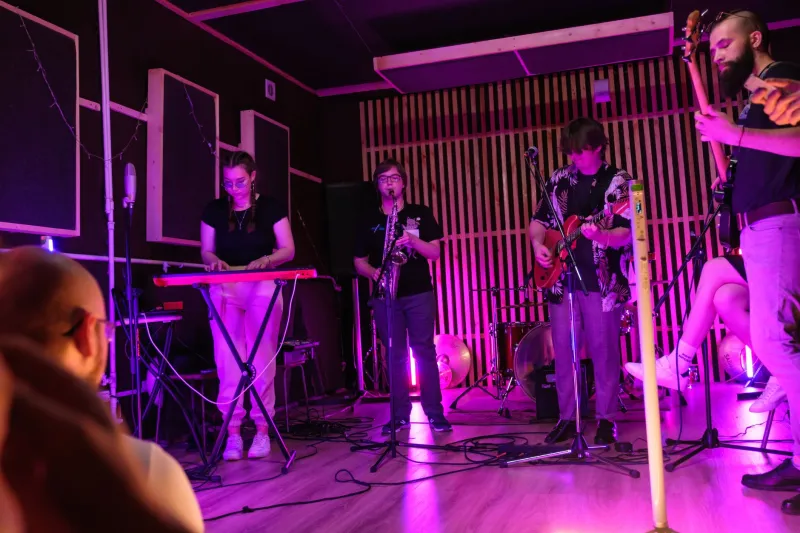
Let's set the scene. It's 2019. You're standing in a sticky-floored venue that holds maybe 300 people, holding a warm PBR, watching a band absolutely destroy a Tuesday night in Nashville. You tell everyone you know. You burn the metaphorical CD. You become the unofficial street team for free.
Fast forward to today. That same band just announced a stadium tour. Their single is on a car commercial. And you — the person who found them — are inexplicably, irrationally, completely furious.
Welcome to the most unhinged corner of music fandom, where loyalty and gatekeeping share a loveseat and nobody's comfortable.
The Ownership Illusion
Here's the thing about discovering a band before they blow up: your brain quietly files that away as a possession. Not a CD, not a ticket stub — an identity. You didn't just like them, you knew them when. And that "knowing" becomes load-bearing for how you see yourself.
"There's a psychological term for this," says Dr. Lena Marsh, a music psychologist based out of Chicago who's spent years studying fan behavior. "We call it identity-based consumption. When you find an artist early, they become part of your self-concept. When they go mainstream, it feels less like they changed and more like you lost something."
So the rage isn't really about the band at all. It's about the version of yourself that felt special for knowing. And now that specialness has been distributed to approximately 2.3 million Spotify monthly listeners, and you're just... another fan.
Rude.
Authenticity as a Weapon
The word "sellout" has done a lot of heavy lifting since the '90s, and it's still working overtime. But what does it actually mean in 2024? A band licensing a song to a Netflix show? Signing with a major label? Playing Coachella instead of a local fest you drove four hours to attend?
The goalposts are always moving, and they're always moving away from wherever the mainstream is standing.
Jamie Okafor, a 28-year-old music blogger from Brooklyn who runs a newsletter dedicated to underground hip-hop, puts it bluntly: "I've caught myself being mad at artists for doing exactly what I told my friends they should be doing. Like, I'd say 'this person deserves way more attention' and then the second they got it, I was annoyed. That's not a great look."
It's not. But it's also extremely human. Authenticity in music has always been a moving target, and underground fans are often the ones holding the gun.
The irony is brutal: we celebrate artists for their rawness, their independence, their refusal to compromise — right up until that refusal stops being necessary because the mainstream came to them.
The Artist's Side of This Is Exhausting
Ask any musician who's made the leap from cult favorite to broadly recognized name, and you'll hear the same story with slightly different details: the moment the old fans turned.
Take indie folk duo The Wren Collective (not their real name — they asked to stay anonymous, which, fair). They spent six years playing house shows and regional festivals before a song of theirs went quietly viral on TikTok. Within eight months, they were opening for a major act on a national tour.
"The DMs we got from some of our early fans were genuinely heartbreaking," says one half of the duo. "Not mean, just... grieving? Like we'd died. And we were standing right there, happier than we'd ever been. It was confusing."
That happiness, it turns out, is also part of the problem. There's an unspoken contract in underground music culture that says suffering is proof of sincerity. When artists start visibly thriving — better production, bigger stages, mainstream press — it reads to some fans as a betrayal of the struggle they felt connected to.
In other words: we want them to succeed. We just don't want them to seem like they're enjoying it.
The Critic's Uncomfortable Truth
Music critics — the professional kind, not just the guy in your group chat who won't stop talking about Midwest emo — have their own complicated relationship with this phenomenon.
"There's a version of criticism that's really just gatekeeping with better vocabulary," admits Marcus Delray, a music journalist who's written for several major publications and would like to keep working at them, thank you. "I've definitely written pieces about a band 'losing something' when they signed to a bigger label, and looking back, what I was really saying was 'I liked being one of the few people who knew about this.' That's not criticism. That's possessiveness."
The critical establishment has long rewarded artists for staying weird, staying small, staying niche. The moment commercial success enters the picture, the narrative almost automatically pivots to decline — even when the music itself hasn't changed a note.
So What Are We Actually Protecting?
At its core, this whole phenomenon is less about music and more about community. Underground scenes aren't just about the sound — they're about the people. The regulars at the small venue. The group chat that shares setlists. The sense that you're all in on something together.
When a band breaks big, that community gets flooded. The inside joke becomes a bumper sticker. The obscure reference becomes a meme. And suddenly the thing that connected you to a handful of weirdos who got it connects you to... everyone. Which somehow feels like it connects you to no one.
"It's gentrification, basically," says Jamie Okafor. "The neighborhood changes, the original residents feel pushed out, and the new people have no idea there was ever anything there before the fancy stuff arrived."
Harsh. Also kind of accurate.
Let Them Have This
Here's the unsentimental truth that nobody in a vintage band tee wants to hear: the artist doesn't owe you their smallness. They don't owe you their struggle. The fact that you found them in a basement in 2017 is a beautiful memory, and it belongs to you. But it doesn't give you a lease on their career trajectory.
Your early fandom was a gift — to you, honestly, more than to them. You got the intimate shows, the direct conversations after the set, the feeling of being ahead of the curve. That was real. That happened. The mainstream catching up doesn't retroactively erase it.
And if the new fans love them too? Maybe that's just the band doing their job extremely well.
You can be proud of that. You can still be annoyed about it. You can hold both.
Just maybe don't leave a one-star review on their new album because it "sounds too polished." That's not a critique. That's a breakup letter dressed up as music journalism, and we can all see what it really is.
They made it. You found them first. Both of those things can be true and nobody has to be the villain.
Even if the new single is kind of a bop and you're not ready to admit it yet.