You Talked Through Their Entire Set and One Day You'll Regret It
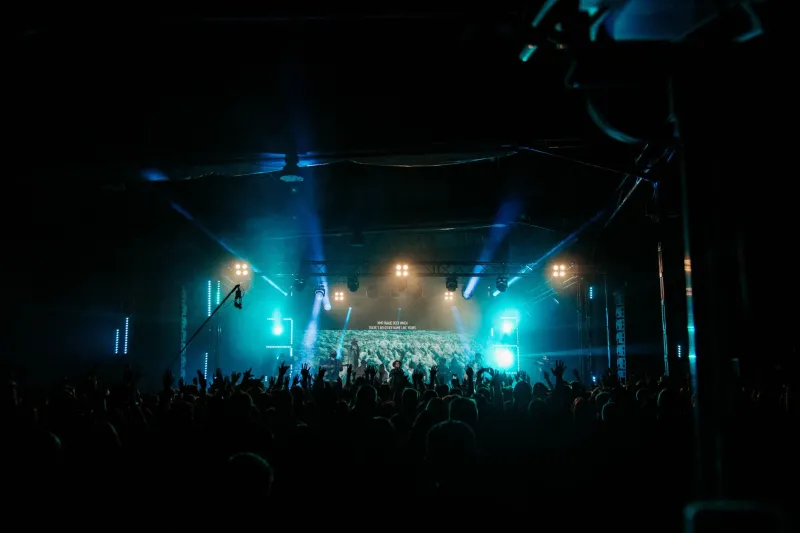
Picture the scene: doors at 7, headliner at 9:15. That leaves a mysterious 90-minute void that most concertgoers treat as a happy hour extension. The opening act walks out to a room that's maybe 40% full, half the audience is in the merch line debating whether $45 is a reasonable price for a t-shirt (it isn't, but you'll buy it anyway), and the other half is loudly recapping their entire week to their friend who is clearly seeing this band for the first time.
Meanwhile, on stage, someone is pouring their whole heart into 25 minutes of material they've toured 300 miles to perform. That person might be the next big thing. And you just asked your buddy if he's seen the new season of Severance during their acoustic ballad.
The Opening Slot Is a Boot Camp Disguised as a Gig
Here's the thing nobody tells you about opening slots: they are brutal. You get 25 minutes — not enough time to build a narrative, win over a hostile crowd, or even properly tune your guitar if the monitor situation is cursed. You play to people who didn't pay to see you. You get paid roughly enough to cover gas and one (1) gas station burrito.
And yet, the opening slot is secretly the industry's best farm system. Everybody's favorite trivia game is "guess who opened for who," and the answers are always absurd. Hendrix opened for The Monkees. Yes, that Hendrix, getting booed by teenage girls who came to hear a manufactured pop band and instead got a left-handed guitar wizard melting faces. The Monkees actually had to ask him to leave the tour because the crowds wouldn't stop raging.
Coldplay opened for some band you've forgotten. Taylor Swift opened for people. Nearly every arena act you love once stood on a stage at 7:40 p.m. while a bartender kept pulling beers and half the room treated the set as background noise for their conversation about parking.
Anecdotes from the Trenches (Told to Me Over Cheap Beer)
I've talked to enough touring musicians to collect a small anthology of opening-night trauma. One singer-songwriter told me about playing a sold-out theater where her entire set was drowned out by a bachelorette party doing a champagne toast directly in front of the stage. She finished the song. She did not finish the champagne-fueled crowd's hearts. Ten years later, that bachelorette party is presumably still out there, and she's headlining rooms twice that size.
Another story: a band opened for a legacy act and got heckled so consistently that the drummer started keeping a tally. "Four boos, two 'you suck's, one guy who threw a hot dog," he told me. "The hot dog is the one that hurt." That band headlines festivals now. Somewhere out there, a man is still processing the hot dog incident.
The point isn't that suffering earns you success. It's that the people getting ignored tonight are frequently the ones selling out the venue next year — and the crowd has an uncanny ability to be wrong about who's worth watching.
Showing Up on Time Is the Music Fan's Final Courtesy
Look, nobody's asking you to become a superfan of a band you've never heard of. But there's a basic social contract at a live show, and it's eroding faster than a parking lot in a Midwest winter.
The rules are simple:
- Arrive before the opener. Not during their last song. Before.
- Watch the set. Or at least pretend. The phone-down, eyes-on-stage bar is on the floor.
- Do not hold a full-volume conversation during a quiet song. The artist can hear you. Everyone can hear you. You are not a whisperer, despite what you believe.
- Clap. It costs nothing. It means everything to someone up there counting the room.
There's a special kind of karma at play, too. The opener you ignore in 2025 might be the act you pay $180 (plus fees, plus the "convenience" of existing) to see in 2028. You had your chance to see them up close for the price of admission you already spent. You chose the merch line.
Why This Matters More Than It Used To
Streaming flattened the music economy, which means touring is basically the only way emerging artists eat. Opening slots are no longer just a résumé builder — they're the wage. When you skip the opener, you're not just missing music; you're opting out of the one economic engine that keeps new artists alive.
Plus — and this is the selfish part — being early is where the magic lives. There is no greater music-fan flex than seeing someone in a room of 30 people who later sells out Madison Square Garden. You can't buy that story. You can only show up for it, 25 minutes early, drink in hand, actually watching the stage.
So next time the ticket says doors at 7, do the radical thing: be there at 7. Find out who the opener is beforehand. Listen to one song. Maybe you'll hate it — fine, at least you gave an honest 25 minutes. But maybe you'll catch the next big thing before the algorithm does, before the ticket prices do, before everyone else claims they were there first.
Because they weren't. You were. If you showed up.