You Unfollowed Them. You Checked Their Profile Anyway. We All Do It.
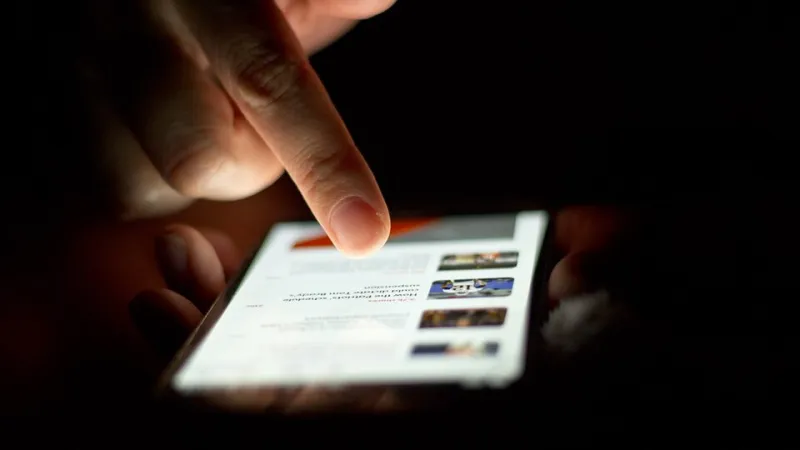
Photo: Japanexperterna.se, CC BY-SA 2.0, via Wikimedia Commons
Let's set the scene. You've done it. You made the move. You hit unfollow — maybe even block — with the energy of someone who has absolutely moved on. You told your group chat. You got the applause emojis. You were free.
And then, roughly seventy-two hours later, you were typing their username into the search bar like some kind of digital homing pigeon with absolutely no self-control.
Welcome to hate-scrolling. It's ugly, it's universal, and it is — somewhat disturbingly — not even limited to regular people. Celebrities do it too. Influencers do it. Your therapist's therapist probably does it. The unfollow-refollow cycle is one of the most normalized weird behaviors of modern life, and yet almost nobody wants to talk about it out loud.
Until now. You're welcome.
The Unfollow Is a Lie We Tell Ourselves
Here's the thing about unfollowing someone: it feels decisive. It feels clean. But according to Dr. Pamela Rutledge, a media psychologist who has spent years studying how humans interact with technology, the act of unfollowing someone doesn't actually sever the emotional connection — it just removes one automatic delivery method.
"Social media creates what psychologists call a 'parasocial loop,'" she explains. "We're wired to seek information about people who matter to us emotionally, whether positively or negatively. Removing a follow doesn't rewire that instinct. It just makes the behavior slightly more effortful — and effort, it turns out, is not much of a deterrent."
In other words: you didn't close the door. You just made yourself knock.
And the knocking, apparently, feels really good. Or at least compelling enough to keep doing it at midnight when you should be asleep.
Why We Can't Quit People We're Supposedly Over
Anonymous confessions collected from an informal online survey (the kind that gets shared around friend groups with the energy of a shared secret) paint a surprisingly consistent picture.
"I unfollowed my ex in October and I have checked his profile approximately four hundred times since then," wrote one respondent. "Not an exaggeration. I have screenshots of his girlfriend's stories. I don't know why. I don't even want him back."
Another: "My former best friend and I had a massive falling out. I blocked her everywhere. Then I made a fake account just to see what she was posting. She looked happy. I was furious. I don't know what I wanted."
And perhaps most relatable of all: "I told everyone I was over my situationship. I was not over my situationship. His Instagram was my home screen for three months."
The throughline in all of these? It's not really about the other person. It's about closure — that elusive, possibly fictional concept that the internet has made simultaneously more accessible and more impossible to achieve.
Social media therapist Vienna Pharaon, who works with clients navigating digital-age relationship dynamics, puts it bluntly: "We're looking for something that will make us feel better or worse — and either one gives us information. Either they're miserable without us, which is validating, or they're thriving, which is infuriating but at least it's something. The not-knowing is actually the most uncomfortable state to sit in."
Celebrities: Just Like Us, But With Verified Accounts
If you needed proof that this behavior transcends income bracket, look no further than the very public digital behavior of famous exes over the past decade.
The breadcrumb trail of celebrity social media interactions — a like here, an unfollow there, a cryptic story posted at 2 a.m. that absolutely everyone knows is about someone specific — has become its own form of entertainment. Fans track these micro-interactions with the intensity of forensic analysts. And they're not wrong to, because the celebrities are absolutely doing the same thing to each other.
There's something oddly humanizing about learning that someone with a publicist, a stylist, and a net worth in the eight figures is still out here refreshing an ex's profile to see if the new person is actually that cute. (They're not. Or they are. Both outcomes are devastating.)
Digital culture analyst Jason Feifer has noted that the verification checkmark doesn't come with emotional immunity. "Fame doesn't change the fundamental psychology of attachment and loss," he told us. "It just adds an audience."
The Algorithm Is Not Your Friend Here
Here's where it gets genuinely sinister: the platforms know what you're doing, and they are actively making it worse.
Every time you tap on someone's profile — even someone you've unfollowed, even someone you've muted, even someone you blocked and then unblocked because you needed to check one thing — the algorithm files that away. It learns that this person is interesting to you. And then it starts surfacing them. In your Explore page. In your "people you may know" suggestions. In the little "they posted a story" nudge that somehow appears even for accounts you thought you'd successfully avoided.
The platforms are not designed to help you move on. They are designed to keep you engaged. And your complicated feelings about your ex? Extremely engaging.
"It's a feedback loop," says one social media strategist who asked to remain anonymous because, quote, "I literally work in this industry and I still do this." "The more you look, the more it shows you. The more it shows you, the more you look. And the whole time, the app is technically doing exactly what it's designed to do."
So What Do We Actually Do About It
Here's the part where a wellness article would tell you to delete the apps, journal your feelings, and go for a walk. And look — those things probably help. We're not going to pretend otherwise.
But the more honest answer might be to simply acknowledge that this behavior is not a personal failing. It's a deeply human response to an unnatural situation — one where the people we've lost, hurt, loved, or just quietly resented are still one search bar away at all times, living their lives in curated highlight reels that we can access forever.
Closure, historically, required some physical distance. You moved away. They moved away. You stopped running into each other at the same coffee shop. The city did the emotional work for you.
Now? The city is the internet, and it is very, very small.
The unfollow-refollow cycle is not weakness. It's just what grief and curiosity look like when they've been handed a smartphone. The move — if there is one — is to notice the pattern, maybe laugh at yourself a little (we're big fans of that here at A-Maloon), and try to ask what you're actually looking for when you type that name in.
Because nine times out of ten, it's not there. And ten times out of ten, you're going to check anyway.
Same time tomorrow, probably.